

Key Takeaways:
- Unlike “5G Home Internet” from mobile carriers, which shares bandwidth with thousands of smartphones, Sail uses a private, purpose-built network. This ensures your connection remains fast and stable even during the peak “rush hour” when cellular networks often experience congestion.
- One of the greatest advantages of FWA is its speed of activation. While laying new fiber lines can take months of street construction and permitting, Sail can typically be fully installed in days or weeks. The small rooftop receiver is discreet and avoids the need for disruptive trenching on your property.
- Because the connection is delivered over the air, it is immune to the most common cause of major internet outages: underground fiber cuts caused by nearby construction. Additionally, Sail’s enterprise-grade equipment is designed to maintain 99.99% reliability even during the fog and rain common to the San Francisco Bay Area.
- While cable internet often offers fast downloads but sluggish upload speeds, Sail’s FWA can provide symmetrical gigabit speeds (1,000 Mbps up and down). This is essential for modern needs like high-definition video conferencing, massive cloud backups, and seamless online collaboration.
Internet connectivity is the essential foundation of any modern property—supporting everything from high-stakes professional projects and virtual collaboration to immersive entertainment and smart device ecosystems. Yet, many locations in the San Francisco Bay Area and Silicon Valley remain tethered to outdated infrastructure that struggles during peak usage or face extensive delays while fiber is physically buried. Sail Internet offers a sophisticated alternative through Fixed Wireless Access (FWA). By delivering high-capacity, fiber-backed signals through the air, Sail creates a dedicated “cable in the sky” that provides robust performance without the typical barriers of traditional wired networks.
What Is Fixed Wireless Internet?
Fixed Wireless Access (FWA) delivers high-speed broadband through radio signals rather than buried copper or fiber-optic cables.
Fixed vs. Mobile Internet
Unlike mobile 5G, which is meant for phones on the move, FWA is designed for stationary use at a specific property, ensuring a much more stable and consistent signal.
Non-Cellular Advantage
Sail utilizes dedicated, non-cellular infrastructure. This means the signal is not shared with thousands of nearby smartphone users, avoiding the “rush hour” congestion common with major carrier 5G plans.
Licensed Spectrum
By using specialized frequency bands, Sail ensures a secure connection, protected from interference that often plagues standard WiFi or public wireless networks.
How Fixed Wireless Internet Works
The Sail Internet network is built on a hybrid fiber-wireless architecture designed for maximum resilience.
- The Core: High-speed fiber connects directly to local distribution points.
- Transmission: These points beam a directional radio signal—utilizing microwave or mmWave frequencies—directly to a target property.
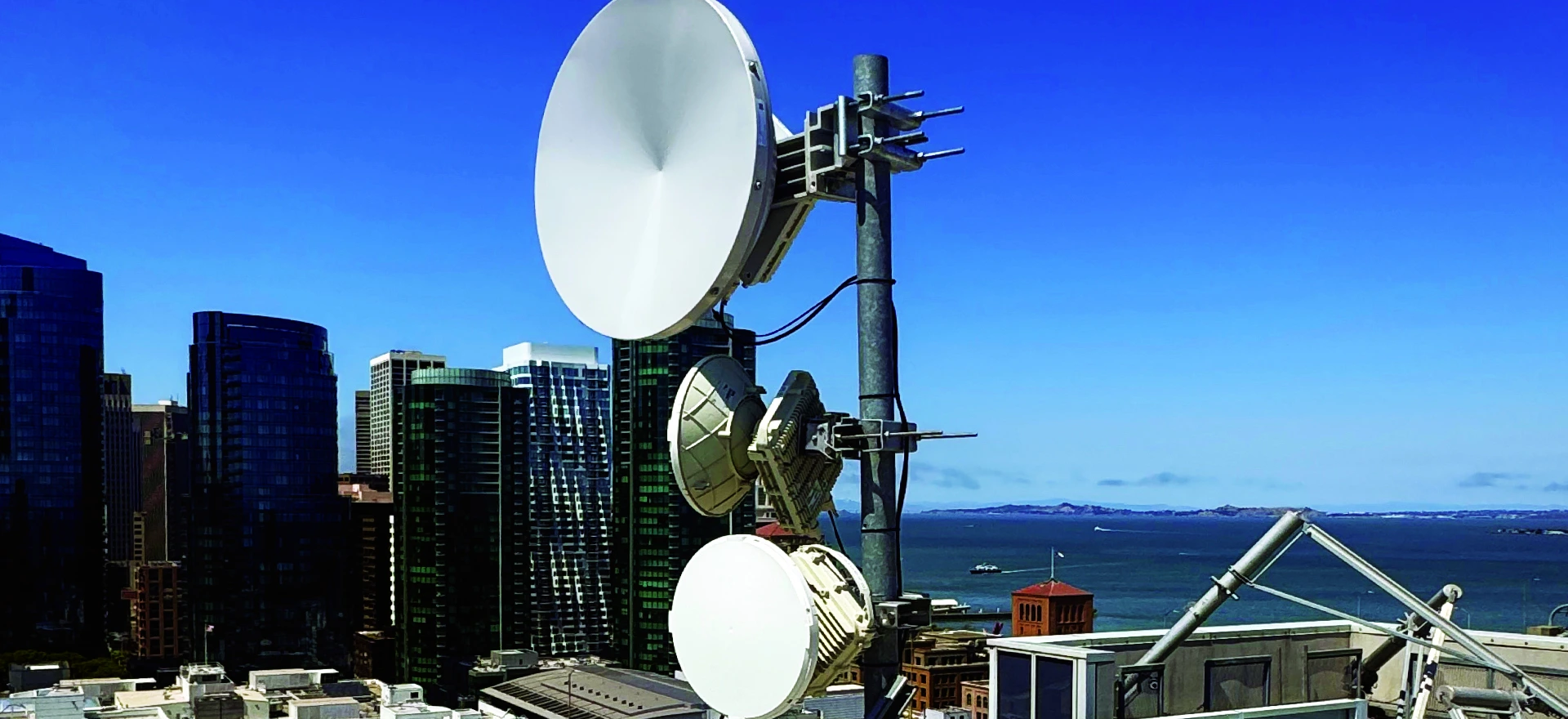
- The Receiver: A small, professional-grade antenna (smaller than a typical satellite dish) is mounted on the building’s exterior.
- Local Access: An Ethernet cable carries the high-speed data from the roof into the property’s network, powering any standard WiFi router.
Fixed Wireless Access
Modern FWA technology has evolved to deliver a truly “fiber-like” experience without the trenching.
- Performance: Fixed wireless can deliver gigabit speeds and ultra-low latency, enabling it to handle the most demanding digital tasks.
- Deployment Speed: While laying fiber in a neighborhood can take months of construction and permitting, fixed wireless can be activated in a fraction of the time.
Fixed Wireless Speeds & Performance
Sail Internet is engineered to provide high throughput and low latency across all service areas.
- Scalable Speeds: Standard connections often reach 200 Mbps, while specialized setups can deliver symmetrical Gigabit (1,000 Mbps) or even multi-gigabit speeds up to 10 Gbps.
- Low Latency: Signals travel over short, local distances, resulting in a network latency typically between 2ms and 25ms—ideal for gaming, VoIP, and real-time collaboration.
- Unlimited Capacity: Sail provides unlimited data without throttling, allowing for continuous, high-bandwidth usage without performance drops.
Fixed Wireless vs. Other Internet Types
Performance and reliability can vary significantly depending on the technology used.
| Feature | Sail Fixed Wireless | Fiber Optic | Cable | Satellite |
| Typical Speed | 100 Mbps – 10 Gbps | 1 Gbps – 10 Gbps | 100 – 1,000 Mbps | 25 – 100 Mbps |
| Installation | Days to Weeks | Weeks to Months | Days | Days |
| Reliability | 99.99% (Above ground) | High (But prone to cuts) | Moderate (Shared) | Weather sensitive |
| Latency | 2ms – 25ms | Ultra-Low | Moderate | Very High |
Fixed Wireless Providers
While large cellular carriers provide 5G home internet, Sail Internet operates as a specialized regional provider with its own dedicated wireless network. This regional focus allows for symmetrical performance and a more direct, fiber-sourced signal than consumer-grade gigabit modems.
Is Fixed Wireless Internet Good?
- Resilience: Sail strives for 99.99% uptime. Because the equipment is above ground, any issues can usually be repaired in hours rather than the days required for underground fiber repairs.
- Security: Signals are transmitted via encrypted, point-to-point links, making them as secure as traditional wired connections.
- Weather Stability: The network is designed to remain stable during typical Bay Area weather, including fog, wind, and rain.
Fixed Wireless for Rural & Multi-Building Use
FWA is a key technology for bridging connectivity gaps in diverse environments.
- Broadening Access: It brings high-speed service to areas where traditional providers refuse to build or where the terrain makes trenching impossible.
- Campus Redundancy: Many properties use Sail as a secondary, “diverse” path; since it enters through the air, it remains active even if a construction crew cuts the underground lines.
Choosing a Fixed Wireless Provider
To ensure the best experience, look for providers that prioritize transparency and professional standards.
- Professional Installation: Avoid “plug-and-play” DIY boxes; a pro-installed receiver ensures the strongest signal and highest speeds.
- Transparent Pricing: Choose flat-rate plans with no hidden equipment fees or contracts.
- Local Infrastructure: Verify that the provider owns and maintains their local network rather than just reselling cellular data.
Ready to Experience the Future of Connectivity?
Don’t let outdated infrastructure or “Big Cable” delays hold your property back from the speeds it deserves. Whether you are seeking a high-performance primary connection or a geographically diverse backup line to ensure 100% uptime, Sail Internet provides the enterprise-grade reliability and local support you need to stay ahead. Skip the construction, bypass the data caps, and join a network engineered for the most demanding digital environments in the Bay Area. Request a professional to help you see how quickly you can transition to a smarter, faster, and more resilient way to connect.
Fixed Wireless FAQs
No. Fixed wireless is the method for getting internet to your property; WiFi is how you share that signal inside.
Yes. Sail’s infrastructure is designed to deliver gigabit performance on par with fiber.
It is ideal if you need a high-speed, reliable connection immediately or if your location lacks access to modern fiber.

Reviewed by Katie Krzywicki (20 April 2026): Katie Krzywicki is part of the commercial team here at Sail. Before coming to Sail, she accumulated nearly a decade of telecom experience across Pacnet, Telstra, and Amazon/eero.