Ether Web Network is now part of Sail Internet — Welcome to Sail! Learn more.
Sail Internet Celebrates 10 Years of Connecting Bay Area Communities

SANTA CLARA, Calif. – Sail Internet marks a major milestone this month, celebrating 10 years since its first customer installations in January 2016. What began with the first homes in Fremont’s Warm Springs neighborhood has grown into a trusted internet service provider serving thousands across the San Francisco Bay Area and Silicon Valley.

“Ten years ago, we connected our first customers in Warm Springs, and that marked the beginning of our journey to bring reliable, high-speed internet to communities that deserved better options,” said Cardi Prinzi, CEO of Sail Internet. “A decade later, we’re honored that 38 customers who joined us in that first year are still with us today.”

From those early days connecting homes in Fremont, Sail Internet expanded to serve businesses across the region, offering dedicated internet services, managed WiFi solutions, and phone line replacement services to enterprises, mid-market companies, and small businesses. The company brought advanced fiber-optic and fixed wireless technology to residential customers, businesses, and multi-dwelling communities (MDU) throughout the Bay Area and Silicon Valley.

In August 2025, Sail acquired Paxio’s MDU business. In November 2025, Sail furthered its growth with the acquisition of Ether Web Network, an internet service provider serving Livermore and surrounding areas, including Pleasanton, Dublin, and San Ramon, thereby extending Sail’s reach into the East Bay and Central Valley.

Sail Internet was founded in 2015 by Stanford alumni and technology innovators Kevin Fisher, Ph.D., and the late George Ginis, Ph.D. Together, they brought decades of telecommunications expertise and more than 20 patents—Fisher served as Engineering VP at 2Wire and Ikanos, while Ginis served as Engineering and Marketing VP at ASSIA. Their vision was to transform how the Bay Area connects by delivering world-class internet service that prioritizes reliability, accessibility, and customer care.

Watch: Sail Internet’s 10th Anniversary Video 

“This anniversary is about more than just marking time,” added Prinzi. “It’s about the relationships we’ve built, the communities we serve, and our ongoing commitment to delivering the fast, reliable internet that makes everyday life and work easier. We’re grateful to every customer who has chosen Sail, and we look forward to the future we’re building together.”

About Sail Internet

Sail Internet provides fast, reliable internet throughout the San Francisco Bay Area and Silicon Valley, offering high-speed solutions for homes and businesses that leverage advanced fiber-optic and wireless technologies. Sail is well recognized for providing excellent service at competitive prices.

For more information, please visit sailinternet.com or email contact@sailinternet.com.

[Summary]
SD-WAN (Software-Defined Wide Area Network) is not merely a backup plan but an intelligent performance layer that transforms separate internet circuits into a unified, actively optimized business network. While having a backup circuit is a passive failover that only kicks in during a total outage, SD-WAN provides active-active redundancy by intelligently managing all connections simultaneously. For cloud-dependent businesses that require guaranteed uptime and want to avoid the high cost of downtime, SD-WAN is a necessary investment in performance, stability, and guaranteed uptime.

Key Takeaways:

  • Traditional redundancy is a passive failover mechanism (e.g., a backup circuit) that is disruptive and only activates in the event of a total primary circuit failure. SD-WAN uses an active approach that manages all connections as a single, resilient network, ensuring you utilize the bandwidth of all circuits simultaneously.
  • Passive failover often fails to switch connections when the primary line is merely degraded (e.g., high jitter or packet loss), leading to unusable cloud applications. SD-WAN constantly monitors circuit health and instantly routes traffic over a more reliable circuit, ensuring seamless switching without downtime, all without the user noticing.
  • Key features include Circuit Bonding, which actively combines up to four connections into a faster logical connection, and Same-IP Failover, which maintains a guaranteed static IP address across all connections, allowing traffic to switch midstream seamlessly upon failure.
  • SD-WAN actively prioritizes business-critical applications using Dynamic QoS. Solutions like Sail Internet provide Optimal Cloud Routing by using a dedicated path that bypasses congested public internet exchange points, ensuring the most efficient route directly to major cloud providers.
  • For any business heavily reliant on the cloud, particularly those in retail, finance, or healthcare, connectivity is the lifeline of daily operations. SD-WAN is a critical investment to ensure operational resiliency and avoid the severe financial costs associated with network downtime.

When is SD-WAN Necessary?

For any business heavily reliant on the cloud—from multi-location retailers and financial service firms to growing healthcare providers—connectivity is the lifeline of daily operations. You’ve likely invested in high-speed circuits, perhaps even adding a second line, believing you have redundancy covered. 

This leads to the core question many business leaders ask: Should I upgrade to an SD-WAN solution? 

If your definition of redundancy is merely having a backup internet cable plugged in, then Software-Defined Wide Area Network (SD-WAN) might seem like an unnecessary extra expense. However, this is where the critical misunderstanding lies. SD-WAN is the intelligent management layer that turns siloed connections into a single, optimized, and actively resilient network.

SD-WAN is a necessary investment in performance, stability, and guaranteed uptime. Without it, you are vulnerable to the devastating effects of downtime. 

The Difference Between Passive and Active Failover

To fully appreciate the value of SD-WAN, we must first address the common scenarios where businesses assume they already have sufficient redundancy:

1. “We Already Have a Backup Circuit” (Passive Failover)

The most common form of redundancy is passive failover. Here, a business purchases two separate internet circuits (e.g., fiber as primary, cable as secondary) and configures its firewall to switch to the backup line if the primary one goes down completely.

  • The Flaw: Crucially, passive failover is disruptive. It only kicks in when the primary circuit experiences a total outage. If the primary line is merely degraded—suffering from issues like high jitter (packet delay variation) or severe packet loss—the firewall often remains connected, leading to unusable cloud applications (e.g., garbled VoIP calls) until the connection is manually or slowly switched over. This downtime, however brief, impacts productivity and revenue.

2. “Our Firewall Can Do Load Balancing and QoS”

Many modern firewalls offer basic Quality of Service (QoS) and load balancing features. While these capabilities are useful, they are often insufficient to meet the demands of modern cloud computing.

  • The Flaw: Firewall-based solutions generally lack the deep, real-time visibility into the “middle mile” of the internet—the path between your ISP and the cloud application provider (AWS, Microsoft 365, Zoom). They cannot automatically detect and adapt to circuit degradation before it causes a severe performance issue, nor can they manage multiple circuits as a unified, optimized whole.

How Does Sail’s SD-WAN Work? Architecture, Circuit Bonding, and Zero-Downtime Same-IP Failover

SD-WAN stands for Software-Defined Wide Area Network. It is a technology that leverages intelligent software to manage, optimize, and automatically control the traffic across all your network connections, creating a powerful, reliable wide area network for the cloud era. The SD-WAN advantages are found in its approach to redundancy, which is active rather than passive.

Using All Your Bandwidth for Increased Reliability With Circuit Bonding

Sail’s SD-WAN utilizes Circuit Bonding. This feature, utilized by Sail Internet’s managed SD-WAN solution, actively combines multiple broadband connections (combinations that could include Fixed Wireless, Fiber, Cable, or 5G Wireless) into a single, cohesive, and significantly faster logical connection.

  • Active-Active Redundancy: You utilize, and pay for, the bandwidth of all your circuits simultaneously, allowing you to take advantage of increased bandwidth and service availability.
  • Zero-Downtime Switching: The most crucial feature is Same-IP Failover. Instead of forcing a disruptive switch when a circuit fails, the intelligent platform provides a guaranteed static IP address across all connections. If one circuit degrades or fails, the intelligent software instantly and seamlessly switches your traffic to a healthy circuit mid-stream, ensuring constant uptime for applications like VoIP and video conferencing. Your users don’t even notice the switch.

Sail Internet SD-WAN’s Performance Advantage With Dynamic QoS and Optimal Cloud Routing

Sail Internet’s SD-WAN solution actively addresses the performance issues that bandwidth alone cannot resolve, delivering on the promise of improved network performance and security.

  • Dynamic QoS (Quality of Service): The intelligent platform continuously monitors circuit health and automatically prioritizes business-critical applications (such as UCaaS, ERP, and POS systems) over less urgent traffic. If a circuit’s quality dips, the software immediately routes critical traffic over a better-performing circuit.
  • Optimal Cloud Routing: Our proprietary Cloud Access Network provides a dedicated, redundant, and resilient path directly to major cloud providers. This ensures your data avoids congested public internet exchange points, guaranteeing the most efficient, trouble-free route.

How To Choose the Best SD-WAN Solution

The full value of SD-WAN is realized when it is deployed as a managed service, allowing you to focus on your business rather than network engineering. Sail Internet delivers a comprehensive SD-WAN solution tailor-made for cloud-dependent, multi-location businesses.

Sail Internet’s Value Proposition:

  •  Installation: Our managed solution is plug-and-play, beginning to work immediately and integrating seamlessly with your existing firewalls, ISPs, and network policies.
  • Operational Control and Insight: Our dashboard provides complete visibility into your network’s real-time and historical performance across the last and middle miles, enabling troubleshooting and proactive risk identification.
  • Total Flexibility: Our solution allows you to standardize distributed sites by bonding any mix of circuits, making it ideal for locations with limited carrier options.

For businesses that cannot afford any downtime—such as those in finance, senior living, law, or retail—Sail Internet’s SD-WAN ensures operational resiliency and a seamless user experience.

Stop Managing the Internet, Start Running Your Business

SD-WAN is the intelligent performance layer that turns disparate internet circuits into a unified, actively optimized business network.

Ready for reliable internet connectivity without complexity? Contact Sail Internet today to discuss a managed SD-WAN solution tailored for your business needs.

5G internet

Reviewed by Katie Krzywicki (6 January 2026): Katie Krzywicki is part of the commercial team here at Sail. Before coming to Sail, she accumulated nearly a decade of telecom experience across Pacnet, Telstra, and Amazon/eero.

LinkedIn

Businesses today rely on WiFi more than ever. From video conferencing to cloud applications, point-of-sale systems, and IoT devices, a reliable network is crucial for operations. All too often, companies manage WiFi on their own, which can lead to headaches with dead zones, low bandwidth, and loss of productivity. 

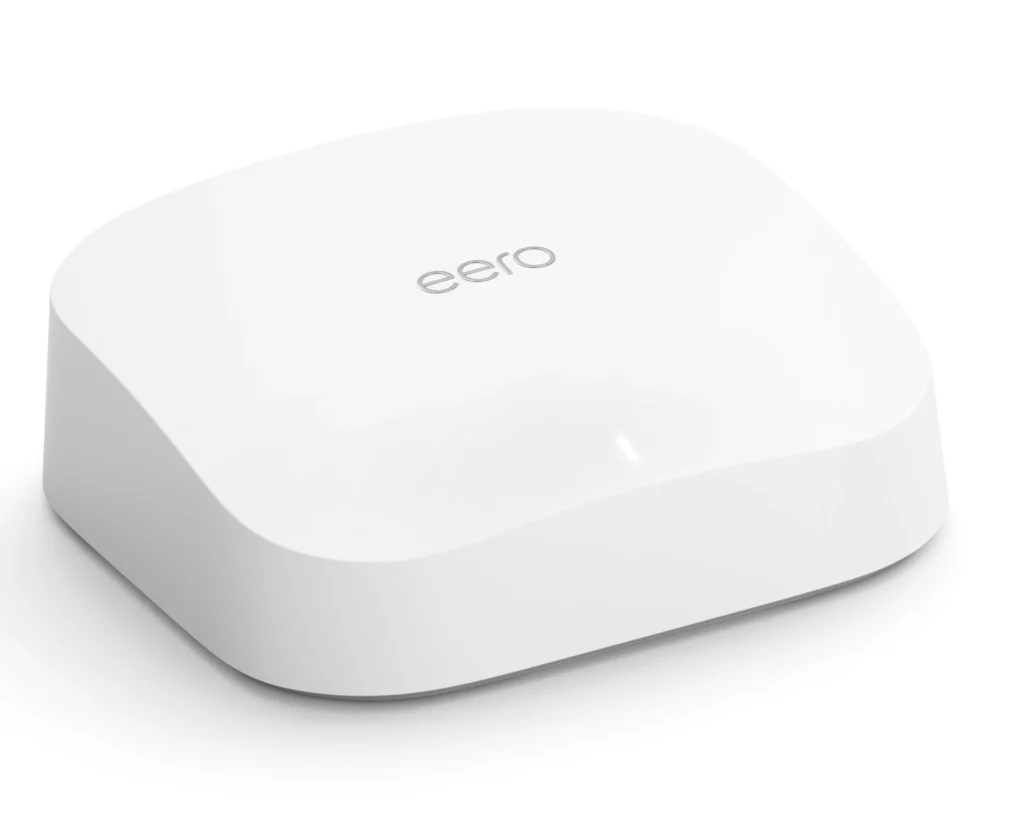
Sail Internet offers a hassle-free solution to deliver business WiFi: NextGen Managed Business WiFi powered by eero. Both have advantages — the best choice depends on your business size, layout, and technical needs.

Sail Internet offers both traditional DIY and managed WiFi solutions. The optimal choice for your business will depend on its specific needs, size, and complexities. This article will help you decide which option is best.

Understanding Traditional WiFi Routers

WiFi routers connect a customer with their internet service provider’s primary connection at their building. Instead of needing a hard connection (like an Ethernet cable), WiFi Routers allow for wireless connectivity across a business. A company may have one router or many depending on square footage, building construction, and the WiFi coverage needed for the business. 

Offices may choose to manage their WiFi on their own.  This means the business is responsible for router placement, troubleshooting, and any security updates required for their routers. 

What Is Managed WiFi?

If router WiFi is the traditional setup, managed WiFi is the next step up. It combines multiple WiFi access points, continuous monitoring, and proactive support to create a stronger, more resilient network.

With Sail’s eero-powered managed WiFi, your business gains:

  • Mesh WiFi coverage – Multiple nodes work together to blanket your space with reliable internet, eliminating dead zones.
  • Proactive monitoring – Sail manages your network health, so issues are often fixed before your team even notices.
  • Enterprise-grade security – Segmented networks for staff, guests, and IoT devices keep your data safe.
  • Remote management – Updates and troubleshooting can happen without an in-person IT call.
  • Visitor analytics & dashboards – With the NextGen Managed Business WiFi platform, you get visitor engagement dashboards and analytics to turn your WiFi into a data tool, not just connectivity (more on that here).

This is especially useful for small to medium businesses that:

  • Operate across multiple floors or a larger space.
  • Have dozens of devices connected at once.
  • Rely on WiFi for customer-facing operations like online ordering, digital check-in, or retail point-of-sale.

Think of a law firm or a growing coworking space — both need consistent WiFi in every corner for staff, guests, and visitors. That’s the kind of challenge eero-powered managed WiFi solves.

Traditional WiFi & Managed WiFi: What are the key differences?

Feature DIY WiFi NextGen Managed WiFi powered by eero
Coverage Dependent on business’s installation and troubleshooting Professional install with full coverage, even across multiple floors
Network Capacity 1 Self-served network Up to 4 managed networks (4 SSIDS)
Setup & Maintenance Managed in-house; IT team handles issues Sail manages setup, monitoring, and assists with troubleshooting
Security Basic protection; IT team is responsible for updating Advanced features: network segmentation, monitoring, and over the air updates
Scalability Product dependent; may require hardware upgrades Easily expand with additional nodes as business grows
Management To be on-site to manage Remote management


How eero-Powered Managed WiFi Helps Businesses

Businesses adopting eero through Sail Internet gain several advantages:

  • Seamless WiFi coverage for every office area.
  • Automatic optimization to ensure devices connect to the fastest node.
  • 24/7 monitoring and proactive support from Sail, reducing downtime and increasing productivity.
  • Guest and employee network separation for security and compliance.
  • Scalability – easily add nodes as your business grows or devices increase.
  • Control – eero Insight and the eero mobile app allow you to make changes remotely and customize as your business grows.

This makes eero ideal for offices, coworking spaces, warehouses, and businesses where reliable WiFi is essential.

Making the Right Choice for Your Business

The decision comes down to your business’s stage and size:

  • Router WiFi is great for single-location, small-team businesses with moderate internet and limited network needs.
  • Managed WiFi with eero is ideal for growing businesses that need wide coverage, secure guest networks, analytics, and proactive support.

Both options are available through Sail Internet, so you’re not locked into one path. As your business evolves, your WiFi can evolve, too. Contact us to discuss your needs.

5G internet

Reviewed by Katie Krzywicki (10th of October 2025): Katie Krzywicki is part of the commercial team here at Sail. Before coming to Sail, she accumulated nearly a decade of telecom experience across Pacnet, Telstra, and Amazon/eero.
LinkedIn

FAQs for Businesses

Managed WiFi is a professionally monitored and supported network with reliable coverage, high speeds, and advanced features. It is ideal for a business environment of any size that wants a low-maintenance solution. 

Hassle-free setup, proactive monitoring, local business-grade support, enhanced security, and flexibility as your business grows. 

eero provides ad-blocking, customizable content filtering, and over-the-air security updates. Utilize eero’s multiple SSIDS to keep guest, business critical, and IoT devices separated.

Professional WiFi installation prevents deadzones, customizes eero’s multiple SSIDs to fit the needs specific to your business, 24/7 proactive monitoring, local support to assist with troubleshooting, all with reliable, blazing fast internet speeds.

Summary:
Fixed wireless vs. fiber internet is one of the most important decisions for businesses evaluating connectivity. While fiber has long been seen as the gold standard, Sail Internet’s enterprise-grade fixed wireless—built on dedicated, non-cellular infrastructure—delivers the same gigabit speeds and reliability while being faster to install, more flexible, and more cost-effective. This guide compares the two technologies so IT leaders and business decision-makers can choose the smarter option for their operations.

Key Takeaways:

  • Fixed wireless delivers fiber-comparable gigabit speeds with enterprise-grade reliability.
  • Fiber is strong, but Sail’s fixed wireless can match its performance and serves as an alternative, being deployed in days, not months.
  • Fixed wireless provides coverage in areas where fiber hasn’t been built, extending reach without sacrificing quality.
  • Fiber’s reliance on construction makes it costly and prone to delays, while fixed wireless avoids these challenges.
  • A major fiber cut can take days to repair
  • For enterprises, fixed wireless is often the smarter choice, offering equal performance with faster deployment and better value.

What is Fixed Wireless Access (FWA)?

Fixed Wireless Access (FWA) delivers internet connectivity through radio signals rather than buried cables. Sail’s enterprise-grade FWA uses dedicated point-to-point wireless links—not cellular networks—to deliver consistent, high-speed, low-latency internet for businesses that demand reliability. Unlike traditional wired options, FWA doesn’t require underground cables, which means installation is quick and cost-effective, and repairs take a matter of hours rather than days.

What is Fiber Internet?

Fiber internet uses fiber-optic cables to transmit data via light signals. It’s known for its high-quality internet connectivity performance due to its ultra-fast speeds and symmetrical upload and download rates. However, fiber requires extensive physical infrastructure, which is expensive and time-consuming to build. Fiber is also prone to fiber cuts due to construction or natural elements. Significant fiber cuts can take days to repair as the cable is underground and may require extensive labor.

Side-by-Side Comparison for Fixed Wireless vs Fiber

Here’s how fixed wireless vs fiber stacks up across the most important factors:

FeatureFixed Wireless Access (FWA)Fiber Internet
Speed1 to multi-Gbps1 to multi-Gbps 
ReliabilityPoint-to-point connections provide 99.99% uptime, and redundant network architecture ensures consistent performance.Vulnerable to fiber cuts and physical infrastructure outages, despite stable operational performance.
AvailabilityAvailable in urban/high-density, suburban, or rural areas as well as hard-to-reach places.Mostly in urban/high-density areas
Installation TimeQuick installation from days to weeks.Weeks/Months due to construction and availability
CostLower setup costs and competitive monthly ratesHigher monthly costs and expensive rollout
Technology TypeDedicated point-to-point or Broadband point-to-multipoint wireless (non-cellular).Fiber optic cable


Verdict: Fixed wireless access (FWA) isn’t a fallback to fiber—it’s a modern enterprise solution that matches fiber’s gigabit speeds and reliability, surpassing it in deployment speed, scalability, and cost efficiency. FWA provides a better balance of performance and value for businesses that can not afford long delays or excessive installation costs.

Fixed Wireless Provides a Practical and Efficient Solution

  • Fixed wireless internet delivers high-speed connectivity on par with or surpassing fiber in cost, deployment speeds, and reliability. It shouldn’t be seen as a backup to fiber but instead as a solid primary service that delivers enterprise-grade connectivity. 
  • Better Cost-to-Value Ratio: Fixed wireless provides a better balance of performance and price, offering robust and reliable service at a more predictable and affordable monthly rate.
  • Faster and Simpler Deployment: Fixed wireless can be deployed in days or weeks, not months, as it does not require trenching or new cables.
  • Lower Upfront Costs: It bypasses the need for costly and disruptive construction, resulting in significantly lower installation and activation fees.
  • Reliability: Sail Internet strives for 99.99% uptime. In the rare case of an outage, repairs can be rectified in a matter of hours, as all equipment is above ground.

Why Choose Fixed Wireless for Your Business?

With Sail Internet’s Fixed Wireless Access (FWA), you get:

  • Gigabit performance: Equal to fiber, supporting cloud platforms, video conferencing, VoIP, and SaaS applications.
  • Rapid deployment: Installed in days or weeks, not months—ideal for businesses that can’t wait.
  • Cost efficiency: A fraction of fiber’s construction costs, with predictable monthly pricing.
  • Scalable solutions: Easily extend connectivity across campuses, industrial zones, or multi-building sites.
  • Enterprise-grade reliability: Redundant network architecture ensures consistent uptime, even in fiber-rich areas.

Fixed Wireless Beats Fiber on Deployment & Cost

When a prominent San Francisco church needed reliable, high-speed internet across multiple buildings, fiber installation wasn’t practical—the construction quotes exceeded $100,000 and would have disrupted daily operations. Sail Internet deployed gigabit fixed wireless in weeks, saving the church over $100K while seamlessly powering live streaming, administration, and community programs.

This case shows that Sail’s fixed wireless doesn’t just keep up with fiber—it can outperform it in speed, cost, and flexibility.

Fixed Wireless Provides Comparable Reliability to Fiber

While fiber internet has traditionally been viewed as the most reliable connectivity option, Sail Internet’s enterprise-grade fixed wireless delivers equivalent reliability with several key advantages. Both technologies can achieve 99.99% uptime under optimal conditions, but fixed wireless offers superior resilience against common infrastructure failures. Fiber networks are vulnerable to cuts from construction activities, natural disasters, and underground utility work—incidents that can leave businesses offline for days while crews locate and repair buried cables. In contrast, fixed wireless infrastructure operates above ground with redundant pathways and backup systems, enabling technicians to identify and resolve issues quickly. When outages occur, fixed wireless repairs typically take hours rather than the days required for fiber restoration. This translates to significantly less downtime and business disruption, making fixed wireless comparable to fiber in reliability, but usually superior in real-world resilience.

Is Fixed Wireless Internet or Fiber Best for Your Business?

So, which is better: fixed wireless vs fiber? Businesses can utilize FWA as a reliable primary internet service, and no longer need to view it solely as a backup to fiber. Sail Internet provides enterprise-grade internet services with 99.99% uptime and low latency, along with a rapid installation process of less than 10 days.

Fiber installation can take months or even years, especially in commercial parks, industrial zones, or newly developed areas. It may not be possible for historical buildings and/or landmarks. The high cost of trenching and permitting can be prohibitive for IT teams that need connectivity today. Sail’s fixed wireless provides enterprises with rapid deployment, enabling critical business applications like cloud computing, SaaS platforms, VoIP, video conferencing, and remote team collaboration—without the delays of fiber construction. 

  • Enter your address to check for service.
  • You can also speak to one of our experts for more information. Speak to them at contact@sailinternet.com
  • If you’re outside of fiber’s reach, want faster installation, or simply want a more affordable and flexible internet option, Fixed Wireless Access (FWA) could be the smarter decision.

Our Sail Internet team makes connectivity simple, fast, and accessible for your business.

5G internet

Reviewed by Katie Krzywicki (31 August 2025): Katie Krzywicki is part of the commercial team here at Sail. Before coming to Sail, she accumulated nearly a decade of telecom experience across Pacnet, Telstra, and Amazon/eero.
LinkedIn

Summary:
For businesses, choosing the right internet connection isn’t about flashy marketing terms like “5G” or “Unlimited LTE”—it’s about real-world performance. LTE and 5G business internet may seem appealing due to their lower upfront cost and plug-and-play setup. Still, they are ultimately consumer-grade solutions not designed for business-critical needs. Sail Internet offers a better alternative with Fixed Wireless Access: a professionally installed, fiber-backed wireless solution that delivers reliable speeds, low latency, and uninterrupted service. This article compares LTE, 5G, and Sail Fixed Wireless to help businesses understand which option best supports their operational needs.

Key Takeaways:

  • LTE and 5G home internet are shared networks—businesses must compete with mobile phone traffic, resulting in inconsistent speeds and low reliability.
  • 5G offers higher speeds than LTE but struggles with indoor coverage, congestion, and a lack of service-level guarantees.
  • LTE is a declining provider of support and has poor upload performance, making it unsuitable for most modern business demands.
  • Sail Fixed Wireless Access is purpose-built for business use. It offers consistent speeds, professional installation, and no data caps or throttling.
  • Sail’s hybrid fiber and wireless infrastructure ensures reliable internet service with built-in power redundancy and responsive customer support.
  • For businesses requiring uptime, stability, and performance, Sail is the superior choice over FWA options.

Small, medium, and large businesses rely on internet connectivity to operate, engage with customers, and share data within the organization. But many struggle with finding the right provider that installs and provides fast, reliable internet. Without it, organizations can end up with massive losses. However, it is down to what type of internet organizations should install to ensure they get the most out of it. As more providers flood the market with buzzwords like “5G” and “Unlimited LTE,” many businesses are finding out the hard way that not all internet options are created equal. If your organization is considering switching from an LTE or 5G solution to Sail Internet’s Fixed Wireless Access (a way to deliver internet using wireless technology instead of wired connections like fibre or cables), here’s what you need to know.

Why Businesses Are Reconsidering LTE and 5G for Internet

Many businesses are tempted by the low sticker price of LTE and 5G home internet. After all, plug-and-play solutions from carriers like T-Mobile and Verizon promise high speeds and minimal setup. But these services come with significant limitations that make them unreliable for business-critical needs:

  • You’re sharing networks. Your connection competes with hundreds of mobile users on the same tower.
  • Speeds are inconsistent. Congestion during peak hours can significantly reduce performance.
  • You don’t receive support for setup. It’s DIY, often leading to suboptimal signal and frustrating downtime.
  • Power outages leave you vulnerable. Most towers lack reliable backup power, meaning service can fail during outages.

Businesses need more than a residential-grade product marketed with a business price tag. Internet is no longer optional or best-effort. It underpins VoIP systems, cloud platforms, inventory systems, CRM access, and day-to-day collaboration. A failure in connection can result in a direct loss of productivity, missed opportunities, or even damage to customer trust.

Thinking Of 5G Internet & You Don’t Know What It Means? (Why It Falls Short for Business)

5G home internet is a form of Fixed Wireless Access (FWA) that uses the cellular 5G signal to deliver broadband to a fixed location. For example, a carrier sends you a 5G-enabled modem that you plug in near a window. This device picks up a 5G cellular signal from a nearby tower and turns it into a Wi-Fi network for your business. It’s similar to having a hotspot, except the device stays in one place instead of being portable and runs your entire internet connection. But it promises near-gigabit-level speeds and low latency when it works optimally.

But using 5G Internet for your business has its pitfalls:

  • Coverage is limited, especially indoors or in dense areas with interference.
  • Upload speeds are slower than download speeds, impacting cloud backups, VoIP, and video conferencing.
  • Performance is volatile — one day blazing fast, the next frustratingly slow.
  • When there is network congestion, your connection gets throttled.

The appeal of 5G Internet is strong in marketing campaigns, but the real-world experience for business users is far less dependable. Despite being labeled “cutting-edge,” 5G often lacks the quality-of-service controls businesses require. Plus, many 5G-based offerings are primarily repackaged consumer solutions without any service-level agreements (SLAs) or professional support.

Why LTE is Yesterday’s Tech with Today’s Limitations

LTE (Long-Term Evolution) is a 4G technology that provides wireless broadband. It has wide coverage, especially in areas where 5G has yet to be reached. 

For example, you may be using your phone as a hotspot to connect your office laptops to the internet. LTE internet works in a very similar way, but with a slightly larger box. You receive a modem from your provider that connects to a 4G tower nearby and shares that signal through Wi-Fi. The concept is simple and easy to set up, but the performance varies greatly depending on how many other devices use the same tower.

In many ways, LTE was never intended to be a full-time replacement for wired internet, especially in busy areas with severe congestion.

However, LTE is a legacy technology that cellular carriers are de-prioritizing:

  • Speeds typically range from 10–30 Mbps under real-world conditions.
  • Latency is high, which can disrupt Zoom calls or remote desktop access.
  • Upload speeds are poor, especially when competing with mobile users.
  • Extreme congestion on LTE networks often causes speeds to grind to a halt.

As LTE infrastructure ages and is replaced by newer technologies, businesses relying on it may face increasing instability and slower performance. 

Many companies that started with LTE as a temporary fix now recognize the need for a more robust and purpose-built solution. LTE was not designed to be a business-grade internet service, and it shows.

Why Sail Fixed Wireless Access Is Built for Business Needs

Sail Internet’s Fixed Wireless Access is not cellular-based. It’s a hybrid of fiber and dedicated wireless infrastructure designed specifically for internet delivery to fixed locations. 

Instead of your internet coming from a crowded tower shared with thousands of users, our team at Sail installs a dedicated gigabit receiver on your building that connects to a nearby distribution point — a node engineered solely to provide fast, reliable internet. 

That distribution point is connected to high-speed fiber, giving you a clean, stable connection without the unpredictability of cellular congestion. This makes it fundamentally different from LTE and 5G.

Here’s what sets Sail apart:

  • Our techs optimize your receiver placement for maximum signal quality.
  • You’re not sharing your connection with hundreds of smartphone users.
  • Use your connection as much as needed — unlimited data without throttling or slowdowns.
  • Supports VoIP, cloud apps, video conferencing, and VPNs without compromise.
  • Sail provides responsive customer service, staffed by experts who understand network infrastructure and its impact on businesses.

Because we use a network architecture dedicated to the Internet (and only the Internet), there are fewer congestion points and less vulnerability to tower overload. 

Instead of tapping into shared towers, your business receives its signal from a purpose-built wireless distribution point designed to serve a neighborhood or block with consistent quality and high throughput.

Here Is A Business-Focused Comparison

FeatureLTE5GSail Fixed Wireless
Speed10–30 Mbps100–300 Mbps (variable)Up to 10 Gigabit speeds
Upload PerformanceLowModerateHigh
ReliabilityLowModerateHigh
SetupDIYDIYPro-installed
Data LimitsYesOftenNone
Ideal Use CaseMobile, backup useCasual home internetBusiness-critical internet
SupportLimitedApp-based onlyHuman, local, responsive


What Happens When Businesses Choose The Wrong Internet Provider

The short-term savings often lead to long-term frustration. Slow speeds, unpredictable outages, and a lack of priority support can cripple your operations. 

When a business can’t rely on its connection, everything from point-of-sale systems to client meetings can go offline. This doesn’t just cause frustration — it hurts your bottom line.

With Sail, your internet becomes an asset, not a liability.

Which Internet Should Your Business Choose?

Sail Fixed Wireless Access is the clear winner if your business values uptime, consistent speed, and responsive support. LTE and 5G may seem cost-effective, but the hidden costs of unreliability, poor performance, and DIY headaches often outweigh the savings.

We deliver high-speed internet tailored for businesses that can’t afford to take chances. With professional installation, proper support, and a network designed for performance, Sail ensures your team stays connected and competitive.

Want to see how your current internet is performing? Test your speed today to see if you’re getting what you’re paying for. Is your office internet giving you issues? Contact us for our business-ready solutions.

5G internet

Reviewed by Katie Krzywicki (29 July 2025): Katie Krzywicki is part of the commercial team here at Sail. Before coming to Sail, she accumulated nearly a decade of telecom experience across Pacnet, Telstra, and Amazon/eero.
LinkedIn

This site employs third-party automatic data tracking technologies such as cookies and pixels that we and our providers use to collect and analyze data about your interactions with our site for marketing purposes and the purposes described in our Privacy Policy. To accept our use of these technologies, please click “Accept” below. To reject, our use of these technologies, please click “Reject.”